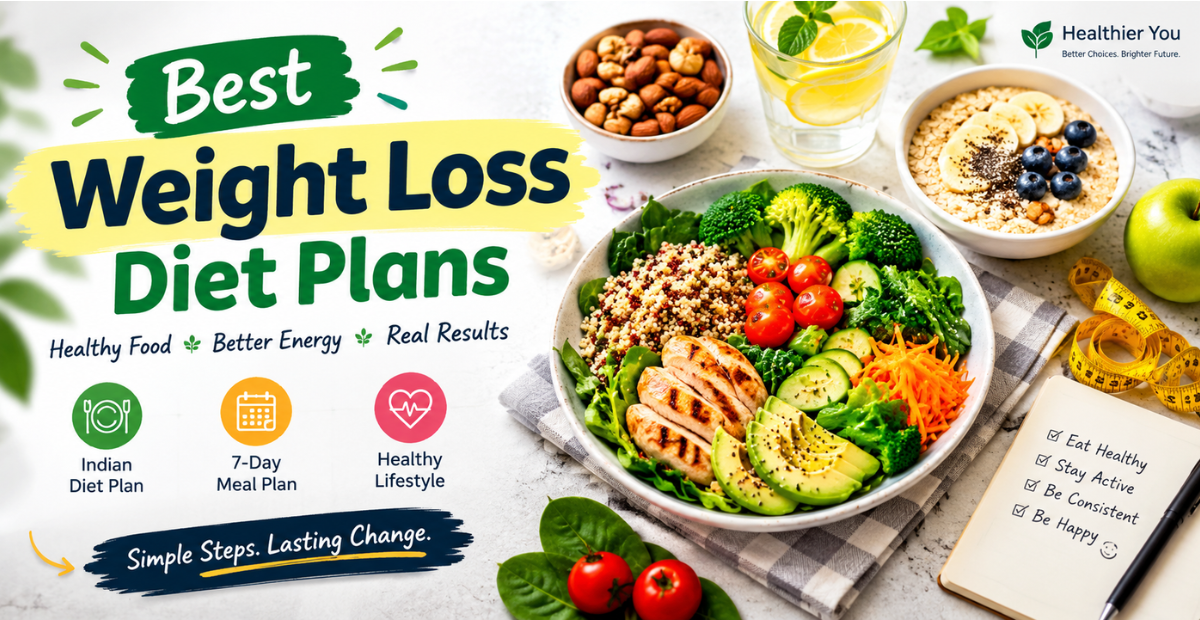
Looking for the best weight loss diet plans that fit your lifestyle without forcing you to give up all your favourite foods? The good news is that healthy weight management doesn’t require expensive meals, extreme restrictions, or starving yourself.
I’ve explored different eating approaches, including the Mediterranean diet, keto, intermittent fasting, low-carb eating, and the DASH diet.
From my experience, planning meals and making consistent changes are more practical than constantly switching between diets.
In this guide, you’ll discover seven popular eating approaches, a practical Indian weight loss diet plan, and a simple 7-day meal guide to help you get started.
Remember, your results will depend on your individual needs, portion sizes, activity level, and consistency.
The best approach is one that provides enough nutrients, helps you manage your hunger, and fits your daily routine. Eating fewer calories than your body uses can support weight loss, but the goal is to do it without compromising your health.
Include protein sources such as dal, beans, paneer, eggs, fish, or chicken.
Eat vegetables, fruits, and whole grains for fibre.
Choose water instead of sugary drinks most often.
Stay physically active and get sufficient sleep.
Build a routine you can maintain rather than following a strict diet for a few days.
You don’t need to eliminate every carbohydrate or avoid all your favourite foods. Consistency matters more than perfection.
2. Mediterranean Diet: A Balanced Approach to Weight Management
The Mediterranean diet focuses on vegetables, fruits, whole grains, beans, nuts, seeds, olive oil, and protein-rich foods. Fish and poultry can be included, while red and processed meats are generally limited.
When I tried Mediterranean-style eating, I found the emphasis on whole foods and balanced meals helpful. I also felt that planning meals around vegetables, fibre, and healthy fats made my routine easier to manage.
You can adapt this approach to Indian meals by including vegetable salads, dal, whole grains, nuts, and suitable protein sources. You don’t have to buy imported ingredients to eat well.
Try this meal idea: Whole-grain toast with eggs or paneer for breakfast, dal and vegetables for lunch, and grilled fish or paneer with salad for dinner.
The main advantage is flexibility. However, portion sizes still matter because even nutritious foods can contribute to excess calorie intake when eaten in large amounts.
3. Keto, Low-Carb, and Intermittent Fasting: Are They Worth Trying?
These approaches can work for some people, but none is necessary for everyone.
Keto diet: This approach severely restricts carbohydrates while increasing fat intake and providing moderate protein.
In my experience, trying keto made me more aware of my food choices and seemed to reduce my cravings. However, that doesn’t mean everyone will experience the same effects. Keto can be restrictive and may not suit people with certain medical conditions.
Low-carb diet: Instead of eliminating carbohydrates completely, you reduce foods such as sugary drinks, sweets, and refined grains while choosing suitable portions of whole grains, vegetables, and protein-rich foods. When a friend and I tried low-carb eating, we found meal planning a useful way to pay more attention to what we ate.
Intermittent fasting: This approach focuses on when you eat rather than prescribing one particular menu. For example, the 16:8 method involves an eight-hour eating window and a 16-hour fasting period. I found that setting an eating window helped me become more mindful of my meals.
However, fasting isn’t suitable for everyone, including some people with diabetes, a history of eating disorders, or those who are pregnant or breastfeeding. Seek professional advice before attempting restrictive diets, particularly if you take medication.
4. DASH and Plant-Based Diets for Long-Term Health
The DASH diet stands for Dietary Approaches to Stop Hypertension. It emphasises vegetables, fruits, whole grains, beans, nuts, and suitable protein sources while limiting excess sodium and added sugars.
I followed the DASH approach for about a month. During that period, I felt my energy levels improve and noticed fewer unnecessary cravings. These were my personal observations, not proof that the diet caused those changes.
A plant-based approach is another option. It prioritises foods such as vegetables, fruits, lentils, chickpeas, beans, whole grains, nuts, and seeds. You can follow a fully plant-based diet or simply make plant foods a larger part of your meals.
Simple meal idea: oats with fruit for breakfast, chickpea salad with whole grains for lunch, and lentils with cooked vegetables for dinner.
Both approaches can support healthy eating when meals are balanced. If you follow a fully plant-based diet, pay attention to nutrients such as vitamin B12, which may require supplementation.
5. Indian Weight Loss Diet Plan: What to Eat Every Day
You don’t need a separate kitchen or expensive ingredients to eat healthily. A practical Indian weight loss diet plan can use everyday foods that you already enjoy.
Here’s a simple structure you can adjust to your appetite and preferences:
Meal
Food options
Breakfast
Besan chilla with curd, vegetable oats, or eggs with whole-wheat toast
Mid-morning
A whole fruit or plain curd
Lunch
Roti or rice, dal or another protein source, sabzi, and salad
Evening snack
Roasted chana, sprouts chaat, or fruit
Dinner
Paneer, tofu, dal, eggs, or chicken with vegetables and a suitable portion of roti or rice
I personally enjoy oats and find simple meals easier to plan. You can also include familiar foods such as poha, idli, rajma, chole, and khichdi.
Focus on balanced portions rather than labelling individual foods as completely good or bad. Include protein at meals, eat vegetables regularly, and adjust portions to your needs.
6. 7-Day Best Weight Loss Diet Plan: A Simple Meal Guide
If you’re unsure how to organise your meals, this sample 7-day weight loss diet plan can help you get started. It uses familiar ingredients and offers vegetarian and non-vegetarian choices.
Day
Breakfast
Lunch
Dinner
Monday
Besan chilla and curd
Roti, dal, and sabzi
Paneer with vegetables
Tuesday
Vegetable oats
Rajma, rice, and salad
Dal, roti, and cooked vegetables
Wednesday
Eggs or tofu with whole-wheat toast
Roti, chana, and sabzi
Vegetable khichdi with curd
Thursday
Poha with peanuts and curd
Rice, dal, and vegetables
Tofu or chicken with vegetables
Friday
Idli with sambar
Roti, paneer, and salad
Dal with roti and sabzi
Saturday
Oats with fruit and plain yoghurt
Chole with roti and salad
Vegetable khichdi with curd
Sunday
Paneer or egg bhurji with toast
Home-cooked meal with balanced portions
Dal, vegetables, and roti
A few things to remember:
Add fruit, curd, or a suitable snack when you’re hungry.
Adjust portions according to your energy needs and activity level.
Drink water regularly throughout the day.
Swap meals based on availability, preferences, and dietary requirements.
This is a flexible example, not a personalised prescription. Exact portions and calorie requirements vary with age, body size, activity, and health conditions.
7. Common Weight Loss Mistakes You Should Avoid
Even a well-designed diet can become difficult to follow if your expectations are unrealistic.
Here are some common mistakes to watch out for:
Skipping meals unnecessarily: If skipping meals leaves you extremely hungry later, try a more regular eating pattern.
Cutting out entire food groups: Avoiding all carbohydrates or fats can make your meals unnecessarily restrictive and harder to balance.
Expecting overnight results: Weight can fluctuate because of hydration, digestion, and other factors. Focus on long-term progress rather than daily changes.
Ignoring sleep and exercise: Eating habits are important, but physical activity, sleep, and stress management also contribute to overall health.
Depending on supplements: Weight-loss supplements aren’t essential for most people. Some may have side effects or interact with medicines, so speak to a qualified healthcare professional before using them.
Choose small, realistic changes you can repeat consistently.
Frequently Asked Questions
Which diet is best for weight loss?
There is no single best diet for everyone. Mediterranean-style, DASH, plant-based, low-carb, and balanced Indian diets can all be options. Choose an approach that meets your nutritional needs and fits your lifestyle.
Can I lose weight by eating Indian food?
Yes. Everyday foods such as dal, roti, vegetables, curd, beans, and paneer can fit into a balanced eating pattern. Portions, preparation methods, and your overall food intake matter.
Do I need to count calories?
Not necessarily. Some people find calorie tracking useful, while others prefer portion awareness and balanced meals. If tracking becomes stressful, consider a simpler approach.
Are weight-loss supplements necessary?
Usually, no. Prioritise balanced meals, physical activity, and sustainable habits. Ask a qualified professional before taking supplements, particularly if you have a medical condition.
Conclusion
The best weight loss diet plans aren’t necessarily the strictest ones. They are the ones that help you eat well, manage hunger, stay active, and maintain healthy habits over time.
From my experience with different eating approaches, I have found that planning meals and being consistent are more practical than constantly chasing a new diet. You can start with familiar Indian foods, adjust your portions, and gradually build a routine that suits you.
You don’t have to change everything today. Start with one or two manageable habits, give yourself time to adjust, and build from there.
If you have a medical condition, take medication that affects blood sugar or appetite, or are considering a highly restrictive diet, consult a qualified healthcare professional for individual guidance.
Found this guide helpful? Share your experience in the comments. Which approach would you find easiest to follow: a balanced Indian diet, Mediterranean-style eating, or a plant-based plan?