
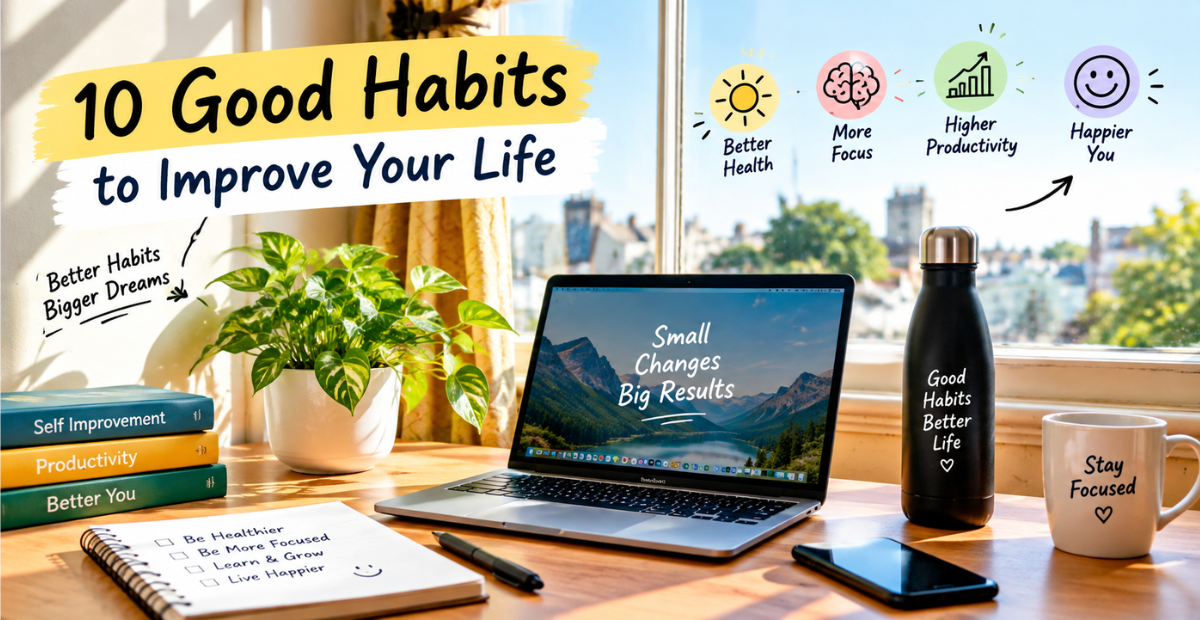
A few months ago, my days felt completely unplanned. I was sleeping late, spending too much time on my phone, putting important tasks off until tomorrow, and wondering why I felt mentally tired by the end of the day.
The strange thing was that I already knew what I wanted to improve. I wanted to become more productive, focused, healthy, and disciplined. But knowing what to change and actually doing it were two different things.
Over time, I realised that good habits don’t require a perfect routine or constant motivation. They require small actions that you can repeat, even on ordinary days.
I didn’t change everything overnight. Some habits worked for me, others took time, and I still had days when I slipped back into old routines. However, I gradually became more aware of how my everyday choices affected my time, focus, and energy.
In this article, I’m sharing 10 practical habits, lessons from my own experience, and simple ways to make positive changes without overwhelming yourself.
What Are Good Habits and Why Do They Matter?
Good habits are repeated actions that support your personal growth, physical health, productivity, relationships, or overall well-being.
Examples include planning your day, reading regularly, exercising, getting enough sleep, learning useful skills, and reducing unnecessary phone use.
The real value of these habits comes from repetition. One productive morning won’t completely change your life, but regularly making better choices can gradually improve your daily routine.
I learned that trying to become a completely different person in a few days usually creates unnecessary pressure. It’s more practical to start with one small change and build from there.
10 Good Habits to Improve Your Life

1. Start Your Morning Without Immediately Checking Your Phone
This was one of the first changes I wanted to make in my routine. Checking notifications immediately after waking up could easily turn into scrolling through social media for much longer than I intended.
Now, try giving yourself some phone-free time before opening distracting apps. You could drink water, get ready, stretch, or decide what matters most that day.
How to start: Keep your phone away from your bed and begin with just 10–15 minutes without scrolling.
2. Drink Water Regularly Throughout the Day
It’s easy to get busy and forget basic needs while working or studying. Keeping water nearby makes drinking regularly more convenient.
Instead of setting complicated reminders, connect this habit with activities you already do, such as having breakfast or taking a break from work.
Remember that individual hydration needs vary with activity, weather, and health. The goal is to maintain a sensible routine rather than force yourself to drink an arbitrary amount.
3. Move Your Body Every Day
Exercise doesn’t always mean joining a gym or completing an intense workout. Walking, cycling, dancing, yoga, stretching, and home workouts are practical ways to become more active.
When I feel mentally overloaded, stepping away from the screen for a simple walk can give me a useful break.
The World Health Organisation recommends that adults aim for at least 150 minutes of moderate-intensity physical activity each week, with additional muscle-strengthening activity. You can build towards these recommendations gradually.
How to start: Take a 10-minute walk or try a short home workout that suits your current fitness level.
4. Read Something Useful Every Day
Reading is a simple way to explore new ideas, develop knowledge, and learn from other people’s experiences.
You don’t need to finish a book every week. Read a few pages of a book, a thoughtful article, or material related to a skill you want to develop.
I’ve found that small reading goals feel more manageable than ambitious targets that become another source of pressure.
How to start: Read five pages after dinner or before sleeping, and choose a topic that genuinely interests you.
5. Plan Tomorrow Before Going to Bed
One of my favourite daily good habits is deciding what deserves my attention before the next day begins.
When everything stays in your head, even simple tasks can feel overwhelming. Writing down your priorities gives you a clearer starting point.
I prefer choosing two or three important tasks instead of creating a long list that is difficult to complete.
How to start: Before bed, write down your three main priorities for tomorrow. Keep the plan realistic and leave room for unexpected responsibilities.
6. Reduce Unnecessary Social Media Time
Social media can be useful for learning, entertainment, and staying connected. The problem begins when opening an app for a few minutes turns into an hour of scrolling.
I’ve experienced this when I wanted to work on something important but allowed distractions to take over.
Instead of depending entirely on willpower, make distracting apps less accessible during focused work.
How to start: Turn off unnecessary notifications, set a reasonable app limit, or keep your phone in another room while working.
7. Protect Your Sleep
Staying awake late can feel productive when you have unfinished work, but more waking hours don’t automatically mean better results.
The US Centers for Disease Control and Prevention generally recommends at least seven hours of sleep for adults aged 18–60. Individual needs can vary.
A regular sleep schedule, a relaxing bedtime routine, and less late-night screen use can help you make sleep a priority.
How to start: Choose a realistic bedtime and wake-up time, then try to follow them consistently.
8. Make Healthier Food Choices
Healthy eating doesn’t require an extreme diet or expensive products. Small improvements to everyday meals can be more practical than trying to eat perfectly.
For example, include a variety of vegetables, fruits, protein-rich foods, and other nutritious options appropriate for your needs. Traditional Indian meals can also fit into a balanced eating pattern.
I prefer the idea of making better choices more often instead of treating one less-healthy meal as a failure.
How to start: Improve one regular meal this week rather than changing your entire diet at once.
9. Practice Gratitude and Notice Your Progress
When you’re working towards big goals, it’s easy to focus only on what you haven’t achieved yet.
I’ve caught myself thinking about unfinished goals instead of appreciating the progress I’ve already made.
Writing down a few things you’re grateful for can help you pause and notice positive parts of your day. You could also record one thing you handled well or one lesson you learned.
This isn’t about pretending that every day is perfect. It’s about acknowledging both your challenges and your progress.
How to start: Before bed, write down three things you appreciated about your day.
10. Keep Learning Something Useful
Personal growth doesn’t stop when you finish school or college. Learning practical skills can help you become more capable and confident over time.
You could improve your communication, writing, financial knowledge, cooking, digital skills, or understanding of a subject that interests you.
I believe learning is especially valuable when you connect it to a real goal instead of collecting information without using it.
How to start: Spend 10–15 minutes learning one useful skill, then practise what you’ve learned.
How to Make Good Habits Actually Last
Knowing which habits are beneficial is only the beginning. The bigger challenge is repeating them when you’re tired, busy, or unmotivated.
These strategies can help:
- Start small: Read five pages instead of demanding an hour of reading every day.
- Connect habits: Read after dinner or plan tomorrow after brushing your teeth.
- Make good choices easier: Keep your book visible and your phone away during work.
- Track your progress: Use a calendar or simple checklist to notice patterns.
- Prepare for difficult days: Decide on a smaller version of your habit for busy days.
Most importantly, don’t treat a missed day as proof that you lack discipline. I have had days when my routine didn’t go as planned, too. What matters is understanding what interrupted the habit and making it easier to restart.
Consistency doesn’t mean perfection. It means returning to something that matters instead of giving up completely.
A Simple 30-Day Plan to Build Good Habits
You don’t need to practise all 10 habits immediately. Try this simple approach instead.
Week 1: Choose one habit, such as planning tomorrow or avoiding your phone for the first 10 minutes after waking up.
Week 2: Continue the first habit and add one manageable change, such as walking regularly.
Week 3: Identify one distraction you want to reduce, such as unnecessary social media use.
Week 4: Review your progress. Keep the habits that fit your lifestyle and adjust anything that feels unrealistic.
This is a flexible starting plan, not a scientific guarantee that every habit will become automatic within 30 days. Building lasting routines can take longer, depending on the person and the behaviour.
Read next: How to Combat Laziness: 11 Simple Tricks That Actually Work
Frequently Asked Questions
What are the best good habits to start with?
Start with habits that address a real problem in your routine. Planning your day, protecting sleep, moving regularly, reducing distractions, and learning something useful are practical options.
How many good habits should I start at once?
Begin with one or two manageable habits. Once they fit comfortably into your routine, consider adding another.
Can small habits really change your life?
Small habits can contribute to meaningful long-term improvements when repeated consistently. Results depend on the habit, your circumstances, and how sustainably you practise it.
What should I do if I break a good habit?
Identify what made the habit difficult, adjust your approach, and restart with a smaller action if necessary. One missed day doesn't erase your previous progress.
Conclusion
I used to think improving my life required a huge burst of motivation. Now, I see the value of making small changes that I can repeat, even when the day isn’t perfect.
These good habits aren’t a shortcut to an entirely different life overnight. They’re practical ways to become more intentional with your time, health, attention, and personal growth.
You don’t have to start all 10 today. Choose one habit that could genuinely improve your current routine. Make it easy enough to repeat, give yourself time to practise, and build from there.
Your life doesn’t have to change in one day. Sometimes, the best place to start is with what you choose to do today.
Keep growing, one small habit at a time.
Read our self-help improvement article here: Hustel With Abhi
✨ Join 10k+ readers for free tips!
Subscribe & never miss a post 📩