
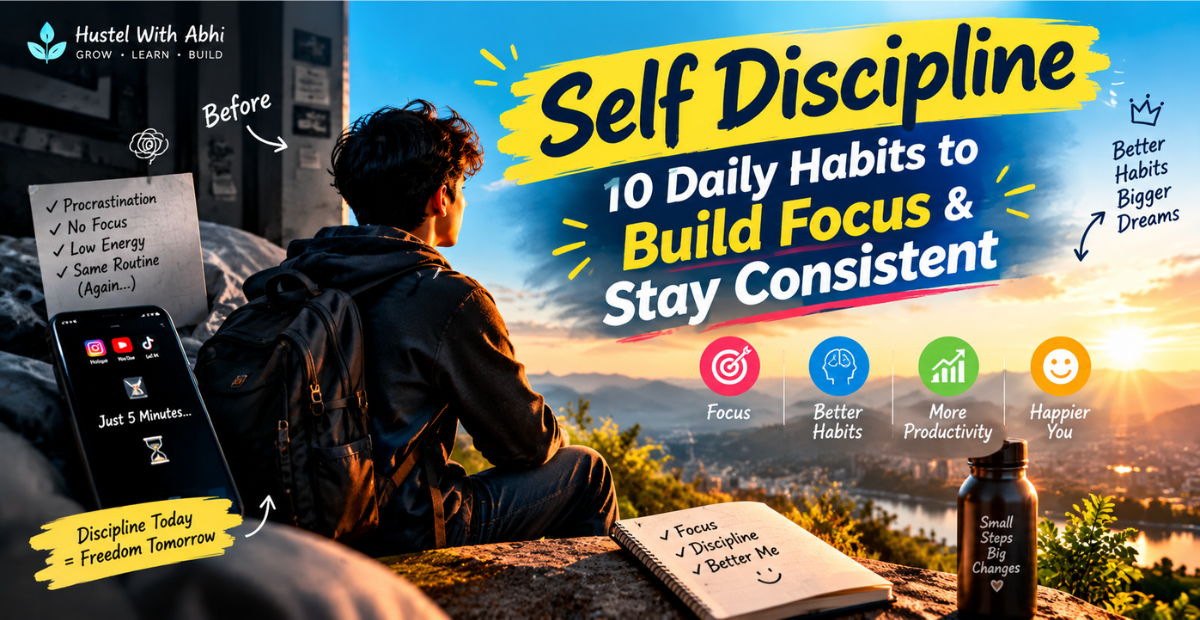
There was a phase in my life when I would make perfect plans every night.
I would tell myself, “Tomorrow I’ll wake up early, study properly, work on my goals, stay away from my phone, and finally become consistent.”
Then morning would come.
The alarm would ring. I would snooze it, pick up my phone for “just five minutes”, and somehow 40 minutes would disappear. By evening, I would feel guilty about wasting the day. At night, I would make another perfect plan and promise myself that tomorrow would be different.
Maybe you have been through the same thing.
For me, this cycle taught me something important: self discipline is not about feeling motivated every day. It is about learning to take action even when motivation is missing.
Self discipline means keeping the small promises you make to yourself. It can help you study when you would rather scroll, work on an important goal when you feel lazy, and return to your routine after a bad day.
The good news is that discipline is not something you either have or don’t have. It can be developed through small, repeatable habits.
Here are 10 practical habits that helped me understand and build self discipline in everyday life.
What Is Self Discipline and Why Does It Matter?
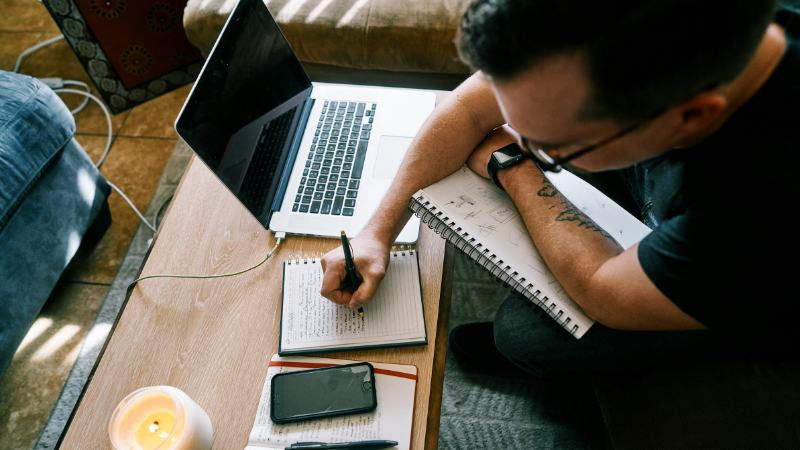
Self discipline is the ability to control your actions and follow through on important tasks even when you do not feel like doing them. It is less about being extremely strict with yourself and more about consistently choosing what matters over what feels easiest in the moment.
Think about studying for an exam.
You may not feel like opening your book. Your phone may be more interesting. You may want to watch one more video first.
Discipline is the moment when you recognize those feelings but still decide to study for the next 20 or 30 minutes.
That small decision may not feel important at the time, but repeated decisions like this gradually shape your habits.
I also learned that discipline improves your relationship with yourself. When you repeatedly do what you told yourself you would do, you begin trusting yourself more.
That confidence is one of the most underrated benefits of self discipline.
Why Is Self Discipline So Difficult?
One reason discipline feels difficult is that many of our everyday distractions provide an immediate reward.
A short video takes seconds to watch. A notification gives you something interesting to check. Scrolling requires almost no effort.
Important goals usually work differently.
Studying, exercising, writing, learning a skill, or building a career can feel uncomfortable before they become rewarding.
I noticed this in my own routine. Whenever I had an important task waiting for me, my mind would suddenly come up with small excuses: check the phone, watch something quickly, reply to a message, or do the task later.
The funny thing is that “later” could easily become an hour.
This is why building self discipline is not simply about having more willpower. Your environment matters too.
If your phone is beside you while you are trying to focus, you are constantly giving yourself an easy distraction.
So instead of asking, “How can I become more motivated?” a better question is often:
“How can I make the right action easier and the distracting action harder?”
That change in thinking made a real difference for me.
10 Self Discipline Habits That Actually Help
If you want to know how to build self discipline, do not try to completely change your life overnight.
Start with habits that are small enough to repeat.
1. Keep One Small Promise to Yourself
Start with one commitment that you can realistically keep.
It could be studying for 20 minutes, writing for 15 minutes, walking for 20 minutes, or completing one important task before entertainment.
The goal is not to impress yourself on day one.
The goal is to prove to yourself that you can follow through.
I used to create huge routines and then feel disappointed when I could not maintain them. Once I started making smaller promises, consistency became much easier.
2. Create a Simple Daily Routine
A routine reduces the number of decisions you need to make.
You do not need a complicated five-page schedule. Decide when you will wake up, when you will work or study, when you will exercise, and when you will relax.
Keep it realistic.
A routine that you can follow most days is much more useful than a perfect routine that survives for only two days.
3. Start Before You Feel Motivated
This was one of the biggest lessons for me.
I used to wait for the “right mood” before starting something important. But that mood often never came.
Eventually, I started telling myself, “Just start for 10 minutes.”
Once I started writing or studying, continuing usually became easier.
You do not always need motivation to begin. Sometimes beginning creates the motivation to continue.
4. Use Focused Time Blocks
When a task feels overwhelming, reduce the starting point.
One simple approach is the 25-minute focus method: work for 25 minutes and then take a short break.
You can adjust the timing according to your situation.
The important part is protecting those minutes from unnecessary interruptions.
For example, put your phone away, close unrelated tabs, and decide exactly what you want to finish during the session.
A focused 25 minutes can be more useful than an hour of constantly switching between tasks.
5. Keep Your Phone Away During Important Work
This sounds simple, but it was one of the most useful changes in my own routine.
When my phone was besides me, I would often reach for it without even thinking.
When I physically moved it away, the temptation became much smaller.
Turn off unnecessary notifications and keep distracting apps out of immediate reach when you need to focus.
You do not have to completely remove technology from your life.
You simply need to stop allowing every notification to control your attention.
6. Fix Your Wake-Up and Sleep Routine
Self discipline becomes harder when your daily routine is constantly changing.
You do not necessarily need to wake up at 5 AM. That advice is often treated like a universal rule, but it is more important to have a sleep schedule that gives you enough rest and fits your responsibilities.
Choose a realistic wake-up time and try to keep it consistent.
For me, the bigger lesson was not waking up extremely early. It was learning to stop making unrealistic promises about what my next morning would look like.
7. Finish One Important Task Before Chasing Small Tasks
Every day, identify one task that genuinely matters.
It could be an assignment, an important work project, writing an article, studying a difficult chapter, or exercising.
Do that before filling your time with small, easy activities.
This habit helps you avoid the feeling of being busy all day without making meaningful progress.
I personally noticed that completing one important task early gave me a much better feeling about the rest of the day.
8. Practice a Short Nightly Reflection
At the end of the day, spend a few minutes looking back.
Ask yourself:
- What did I complete today?
- Where did I lose focus?
- What distracted me?
- What is one thing I can improve tomorrow?
I started doing this because I noticed that simply feeling guilty about an unproductive day did not teach me anything.
Reflection was different.
Instead of saying, “I wasted today,” I could ask, “What caused it?”
That small shift turns failure into information.
9. Make Your Goals Smaller When You Feel Overwhelmed
Sometimes the problem is not a lack of discipline. The task itself feels too large.
If “study for five hours” feels impossible, start with one chapter.
If “write an entire article” feels overwhelming, write the introduction.
If “change my whole lifestyle” feels unrealistic, improve one part of your routine.
Small progress still counts.
In my experience, reducing the size of the first step often made starting much easier.
10. Restart Quickly After a Bad Day
This might be the most important habit of all.
You will miss a workout.
You will waste an evening.
You will scroll longer than you planned.
You may even completely break your routine for a few days.
That does not mean you have failed permanently.
The mistake is turning one bad day into a bad month.
When I broke my routine, I learned to stop waiting for Monday or the beginning of a new month. Sometimes the best time to restart was simply the next hour.
Self discipline is not never falling off your routine. It is learning to return to it.
How to Build Self Discipline Without Feeling Overwhelmed
The easiest way to build self discipline is to focus on consistency before intensity.
You do not need to transform your entire life in one week. Choose one or two habits, make them easy to start, and repeat them until they begin to feel normal.
For example, instead of deciding to study for four hours every day, begin with 20 focused minutes.
Once that becomes comfortable, you can gradually increase the time.
This approach worked better for me than constantly creating ambitious routines.
There were days when I could only give 15 minutes to something important. Earlier, I would consider that a failure because it was not the two or three hours I had planned.
Later, I realized that 15 focused minutes were still better than zero.
That mindset helped me become more consistent.
Common Self Discipline Mistakes to Avoid
Many beginners make the same mistake: they try to become extremely disciplined overnight.
They create a schedule that includes waking up early, exercising, reading, studying for hours, avoiding social media, learning new skills, and completing every goal at once.
Then life happens.
They miss the routine for a day and assume they are not disciplined.
Another mistake is depending completely on motivation. Motivation can help you start, but your routine needs to work even on ordinary days.
Also, do not confuse self discipline with punishing yourself.
Being disciplined does not mean being harsh with yourself whenever something goes wrong. It means being honest about what happened and taking responsibility for the next step.
Your goal is not perfection.
Your goal is becoming more reliable with your own commitments.
What Changes When You Become More Disciplined?

The benefits of self discipline usually appear gradually.
You may notice that you procrastinate less because starting no longer feels as difficult. You may become better at protecting your attention. You may feel more confident because you are actually following through on your plans.
There is also a quieter benefit.
You start spending less energy arguing with yourself.
Instead of repeatedly thinking, “Should I do this now or later?” you begin following a routine you already decided on.
That mental clarity can make everyday life feel lighter.
I experienced this slowly rather than suddenly. Nothing magical happened overnight. But when I started keeping small promises to myself, my confidence began changing along with my habits.
That is what made discipline meaningful to me.
How can I build self discipline every day?
Start with one small habit you can realistically repeat. Choose a specific time, remove obvious distractions, and focus on completing the habit rather than doing it perfectly. As consistency improves, gradually increase the difficulty.
What are the best self discipline habits?
Useful habits include keeping a realistic routine, starting before you feel motivated, using focused work sessions, reducing phone distractions, reflecting at night, and restarting quickly after a missed day.
Can self discipline be learned?
Yes. Self discipline can be developed through repeated behavior. You do not need to become highly disciplined immediately. Small commitments, consistent routines, and a supportive environment can make disciplined behavior easier over time.
How do I stay disciplined when I have no motivation?
Make the task smaller and remove distractions before you begin. Instead of waiting to feel motivated, commit to doing the first 10 or 20 minutes. Starting is often easier when the task does not feel overwhelming.
Conclusion
Self discipline is not about becoming a perfect person who never gets distracted, tired, or unmotivated. It is about becoming someone who keeps returning to what matters.
Start small, protect your attention, keep realistic promises to yourself, and do not let one bad day decide what happens next.
I learned this slowly, and you can too. Take one useful habit from this article and start today.
If this helped you, explore our other practical self-improvement articles, share your experience in the comments, and subscribe for future tips.
Read All Life-Changing Content Here: Hustel With Abhi
✨ Join 10k+ readers for free tips!
Subscribe & never miss a post 📩
2 thoughts on “Self Discipline: 10 Daily Habits to Build Focus and Stay Consistent”