
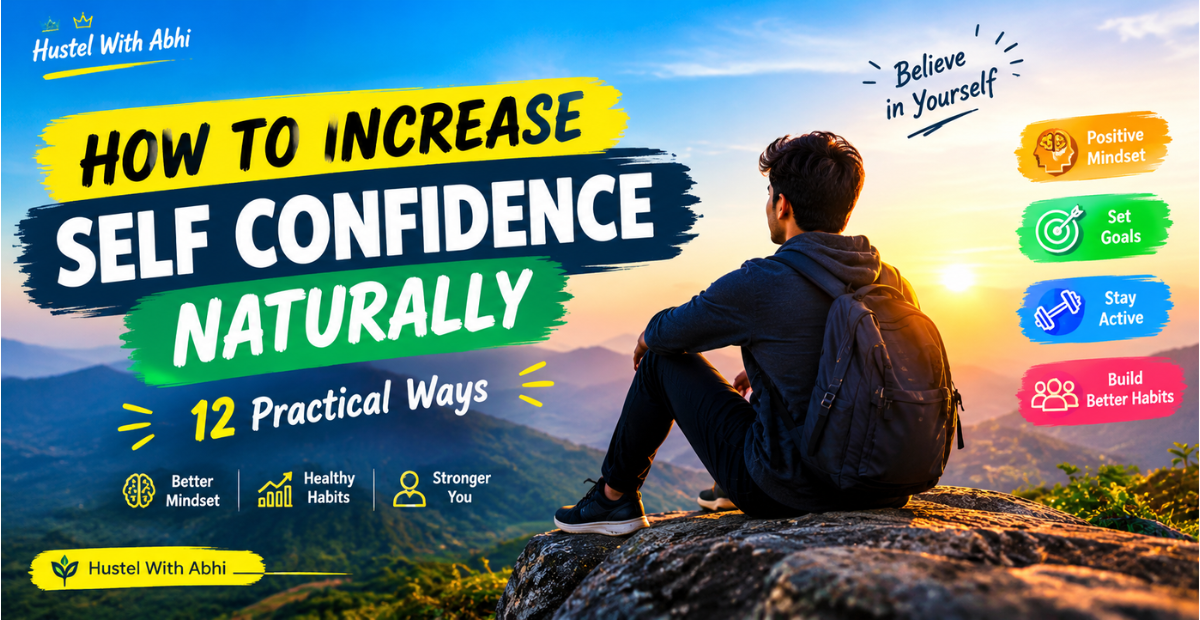
If you want to know how to increase self confidence naturally, start with one simple idea: confidence usually grows through action, not by waiting until you feel confident. Small goals, healthier self-talk, new challenges, better communication, exercise, and consistent habits can gradually help you trust yourself more.
I have personally noticed this in my own life. There were times when negative thoughts and overthinking made simple situations feel harder than they actually were.
What helped me was not trying to become confident overnight but taking small actions, improving my daily habits, and proving to myself that I could handle uncomfortable situations.
In this guide, you’ll learn practical ways to build self-confidence naturally without pretending to be someone you’re not. You don’t need to apply everything at once. Pick one or two methods, practise them consistently, and build from there.
What Is Self-Confidence?

Self-confidence is the belief that you can handle a particular task, situation, or challenge. It doesn’t mean you never feel nervous, make mistakes, or experience self-doubt. Instead, confidence means being willing to take action even when you don’t feel completely comfortable.
For example, you might feel confident writing something but nervous when speaking in front of a group. That’s normal. Confidence can vary depending on the situation and can become stronger with practice and experience.
This is why building confidence is less about trying to “feel confident” all the time and more about creating experiences that show you what you’re capable of.
Challenge Negative Self-Talk
One of the first steps to increase self confidence naturally is to pay attention to the way you talk to yourself. When you repeatedly tell yourself, “I can’t do this,” “I’ll probably fail,” or “Everyone is better than me,” those thoughts can influence how you approach challenges.
Instead of blindly replacing every negative thought with an unrealistic positive statement, question it.
Ask yourself:
- Is this thought actually based on facts?
- Am I assuming the worst without evidence?
- What would I say to a friend in the same situation?
- What is one realistic action I can take right now?
For example, replace “I’m going to fail” with “I haven’t done this before, but I can prepare and give it a try.”
I have personally found that writing down my thoughts and spending a few quiet minutes with yoga, pranayama, or journaling helps me notice negative thinking instead of automatically following it.
Mayo Clinic recommends becoming aware of negative self-talk, challenging inaccurate thoughts, and replacing them with more realistic and encouraging ways of thinking.
Instead of blindly replacing every negative thought with an unrealistic positive statement, question it.
Keep Small Promises to Yourself
Confidence becomes much more believable when you have evidence that you can trust yourself.
Start with small promises. If you decide to study for 20 minutes, finish those 20 minutes. If you plan to go for a walk, take the walk. If you write down one important task for the day, try to complete it before moving on to something less important.
These actions may look ordinary, but they create something important: self-trust.
I have noticed this in my own routine. When I finish one important task instead of constantly jumping between different things, I feel more in control of my day. That small feeling of control makes it easier to take on the next challenge.
Don’t make your promises unnecessarily big. Start with something you can realistically complete, repeat it, and gradually increase the challenge.
Set Small Goals and Track Your Progress
If your goal is “become confident”, it is difficult to know what to do today. Turn that broad goal into a small action you can actually complete.
Instead of saying:
“I want to become more confident.”
Try:
“Today I will speak up once during a conversation.”
Or:
“I will spend 10 minutes practising a skill I want to improve.”
At the end of the day, write down what you completed. You don’t need a complicated productivity system. A simple notebook is enough.
Over time, these small records give you something more useful than motivation: evidence of progress.
NHS guidance on self-esteem similarly recommends setting achievable challenges and goals, because completing them can help build self-esteem.
Use Confident Body Language
Your body language cannot magically create confidence, but it can influence how you present yourself and how you feel in a situation.
Start with a few simple habits:
Stand upright: Avoid constantly looking down or collapsing your shoulders.
Make natural eye contact: Look at the person while listening and speaking, but don’t force yourself to stare continuously.
Slow down: When you’re nervous, you may speak or move faster than usual. Taking a breath and slowing down can make your communication feel more controlled.
Keep your expression relaxed: You don’t need to force a smile. A calm face and relaxed posture are enough.
Research summarised by the American Psychological Association found that upright or expansive body positions can influence self-perception and are associated with feeling more confident, although the evidence does not support older claims that power poses change testosterone or cortisol levels.
5. Step Outside Your Comfort Zone Gradually
You don’t need to force yourself into your biggest fear to become confident. A better approach is to start with manageable challenges and gradually increase the difficulty.
For example, if speaking to new people makes you nervous, don’t start by giving a speech to 100 people. Start with one simple conversation. Once that becomes easier, try speaking to someone new again or sharing your opinion in a small group.
The same idea works for public speaking, interviews, presentations, asking questions, or learning a new skill.
I used to feel uncomfortable starting conversations with strangers. What helped me was starting with simple questions instead of expecting myself to suddenly become highly social.
Confidence grows when you repeatedly discover, “I was nervous, but I handled it.”
NHS guidance also encourages people with low self-esteem to take on achievable challenges instead of allowing fear or nervousness to stop them from trying.
Improve Your Communication Skills
Sometimes what feels like a lack of confidence is actually a lack of practice with communication.
Start small. Speak a little more clearly, ask questions instead of staying silent, share your opinion when it is relevant, and practise saying “no” when you genuinely cannot take something on.
You don’t need to become loud or extremely outgoing. Confident communication can be calm, respectful, and direct.
One useful skill is assertiveness—the ability to express your thoughts, needs, or boundaries without unnecessarily attacking or avoiding other people.
Mayo Clinic notes that assertive communication can support self-confidence and self-esteem and recommends starting with lower-risk situations while you practise.
Build Daily Habits That Make You Trust Yourself
Your daily habits can either make you feel in control of your life or constantly leave you feeling behind.
You don’t need a perfect morning routine. Start with a few habits you can actually maintain:
- Write down one important task for the day.
- Spend a few minutes journaling or reflecting.
- Exercise or walk regularly.
- Practice one useful skill for 10–20 minutes.
- Reduce unnecessary phone and social media distractions.
- Review what you accomplished before going to bed.
- Maintain a consistent sleep schedule and give your body enough time to rest.
For me, planning the next day’s important tasks helps reduce the feeling of being overwhelmed. When I know what I need to do, it becomes easier to focus on completing one thing at a time.
The goal isn’t to build a perfect routine. The goal is to become someone who regularly follows through on small commitments.
Exercise Regularly
Exercise is not only about changing your appearance. It can also give you regular opportunities to set a goal, complete it, and notice your progress.
Start with something realistic: walking, running, yoga, stretching, bodyweight exercises, or another activity you enjoy. You don’t have to begin with an intense workout.
Personally, I find activities such as running, yoga, and pranayama useful for creating a sense of routine and helping me feel more focused.
Mayo Clinic notes that regular exercise can improve mood, help manage stress, improve sleep, and increase self-confidence, including through the sense of achievement that comes from meeting exercise goals.
Stop Comparing Yourself With Other People
Constantly comparing your appearance, achievements, income, social life, or progress with someone else’s can make your own progress feel smaller than it really is.
Social media can make comparison harder because people usually share selected moments rather than the full reality of their lives.
Instead of asking, “Am I better than them?”, ask:
“Am I improving compared with where I was a few months ago?”
You can also reduce unnecessary comparison by limiting the accounts or content that consistently make you feel inadequate or distracted.
Your goal isn’t to become better than everyone else. It is to become more capable, consistent, and comfortable with yourself.
Build Confidence Through Skill Development

It is difficult to feel confident about something you have never practised. That’s why learning useful skills can become a practical path to self-confidence.
Choose one skill that matters to your life—communication, writing, public speaking, fitness, studying, coding, design, or anything else you genuinely want to improve.
Start with 10–20 focused minutes a day, or choose another amount of time you can consistently maintain.
At first, you may feel awkward or slow. That’s normal. The goal is not to become excellent immediately. The goal is to collect small improvements over time.
When you look back after a few months and realise that something which once felt difficult has become easier, you have real evidence that you can learn and improve.
Accept Mistakes Without Attacking Yourself
Making a mistake does not automatically mean that you are incapable. It means that something didn’t go as planned.
Instead of saying:
“I’m a failure.”
Try:
“This didn’t work. What can I learn from it, and what can I do differently next time?”
This distinction matters because confidence doesn’t come from believing that you’ll always succeed. It comes partly from knowing that you can deal with mistakes, learn from them, and continue.
Mayo Clinic recommends challenging harsh or inaccurate self-judgments and treating mistakes as events rather than permanent definitions of who you are.
Spend More Time Around Supportive People
The people around you can influence how you see yourself. If someone constantly mocks your efforts, dismisses your progress, or makes you feel inadequate, it can become harder to maintain a healthy view of yourself.
That doesn’t mean you should avoid every person who disagrees with you. Constructive feedback can help you grow. The difference is whether someone is helping you improve or repeatedly putting you down.
Try to spend more time with people who respect you, encourage healthy growth, and give honest feedback without making you feel worthless.
Mayo Clinic also recommends spending time with people who make you feel supported and valued as part of building healthier self-esteem.
A Simple 7-Day Self-Confidence Challenge
If you don’t know where to start, don’t try to change your entire personality in one day. Use this simple 7-day challenge instead.
Day 1: Write down three things you have done well recently.
Day 2: Complete one small task you have been avoiding.
Day 3: Start a short conversation with someone instead of waiting for them to speak first.
Day 4: Spend 20–30 minutes walking, exercising, stretching, or doing another physical activity you enjoy.
Day 5: Notice one negative thought and challenge it with a more realistic response.
Day 6: Practice one skill for 20 minutes.
Day 7: Write down what you learned about yourself during the week and choose one habit to continue.
Don’t expect to become a completely different person after seven days. The purpose of this challenge is simply to start collecting small experiences that show you can take action, handle discomfort, and keep improving.
Self-Confidence vs Self-Esteem: What’s the Difference?
Self-confidence and self-esteem are related, but they are not exactly the same.
Self-confidence is often connected to your belief that you can handle a particular task or situation. For example, you may feel confident giving a presentation because you’ve practised it many times.
Self-esteem is more closely related to how you view your overall worth and value.
This means you can be confident in one area and insecure in another. You might be confident at work but nervous in social situations.
Understanding this difference can help you focus on the right problem instead of simply telling yourself to “be more confident”.
Frequently Asked Questions
How can I increase my self-confidence naturally?
You can build self-confidence naturally by challenging negative self-talk, setting small achievable goals, practicing useful skills, exercising regularly, improving communication, taking manageable challenges, and tracking your progress. Confidence usually develops through repeated action and experience rather than appearing overnight.
How can I build confidence quickly?
There is no reliable overnight method for building lasting confidence. A practical way to start is to choose one small challenge you have been avoiding, prepare for it, and complete it. Repeating manageable challenges can gradually increase your sense of self-trust.
What are the best daily habits for self-confidence?
Useful habits include keeping small promises to yourself, exercising, practicing a skill, limiting unhealthy comparison, writing down your daily priorities, and challenging negative self-talk. Choose only a few habits at first so you can stay consistent.
Can exercise improve self-confidence?
Yes. Exercise can support mood, stress management, sleep, and self-confidence. Completing realistic exercise goals can also give you a sense of achievement. You don't need an intense workout; regular activity that you can maintain is a good starting point.
What is the difference between self-confidence and self-esteem?
Self-confidence usually refers to your belief in your ability to handle a specific task or situation, while self-esteem relates more broadly to how you value and view yourself. They are connected but not identical.
Conclusion
Learning how to increase self confidence naturally isn’t about becoming fearless or pretending that everything is easy. It’s about learning to trust yourself a little more through your daily actions.
Start small. Challenge one negative thought. Finish one task you promised yourself you’d complete. Practise a useful skill. Speak up when you normally stay quiet. Take care of your body. And when something doesn’t go well, learn from it instead of using the mistake as proof that you aren’t capable.
You don’t have to feel confident before you take action. Sometimes, action is what gives you a reason to become confident.
Start with one small step today, repeat it tomorrow, and let those small experiences build into something stronger over time.
If you’re working on self-discipline, better habits, and personal growth, explore more practical guides on Hustel With Abhi.
✨ Join 10k+ readers for free tips!
Subscribe & never miss a post 📩