
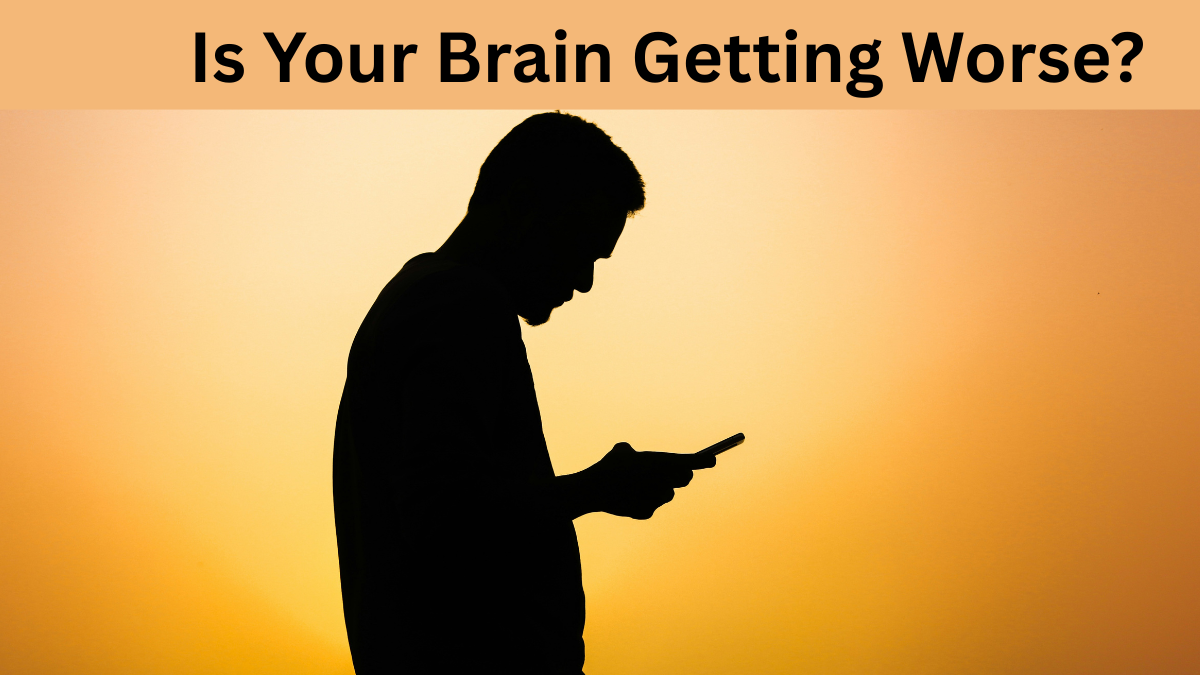
“Brain rot meaning” isn’t just an internet meme, okay? It has, in fact, evolved into a warning sign. Why is our collective focus becoming so weak these days? Why do 5 minutes of phone usage so often turn into two wasted hours—and without us even realising it?
To be honest, endless scrolling, short-form reels, and constant dopamine hits are slowly leaving our brains mentally exhausted.
I’ve personally noticed that after excessive phone use, my focus, motivation, and productivity gradually begin to decline.
In this article, we will explore—in simple language—what “brain rot” actually means, identify its hidden signs, and discover how we can use small daily habits to naturally improve our focus.
Brain Rot Meaning Explained in Simple Words

What Does “Brain Rot” Actually Mean?
The term brain rot is internet slang used to describe a condition where someone feels mentally dull, distracted, and overloaded because of consuming too much low-quality online content.
It does not mean your brain is literally damaged. People mostly use this phrase jokingly online, but the feeling behind it is very real. Many people experience mental fatigue after spending hours scrolling through short-form content every day.
Think about it like this. If you eat junk food every single day, your body starts feeling unhealthy. In the same way, when your mind constantly consumes random, fast, and addictive content without rest, your focus slowly becomes weaker.
That is why the phrase became viral online. People started noticing that endless scrolling was affecting their attention span, productivity, and even emotional health.
Why Is Everyone Talking About Brain Rot?
One big reason is modern content culture. Almost every app today is designed to keep users hooked for as long as possible.
Reels culture changed how people consume information. Videos are short, fast, emotional, and addictive. Your brain gets used to quick entertainment every few seconds. After some time, normal activities like reading, studying, or deep thinking start feeling “too slow”.
Meme culture also plays a role here. Funny content is not bad by itself, but constant consumption without balance can overload the mind. Many people now spend more time reacting to content than actually living real life.
Then comes dopamine scrolling. Every swipe gives the brain something new. One funny clip. One emotional video. One shocking headline. Your brain starts chasing stimulation continuously.
And honestly, that constant stimulation becomes exhausting after some time.
Is Brain Rot a Real Medical Condition?
No, brain rot is not an official medical condition. Doctors do not diagnose someone with “brain rot”.
But the symptoms connected to it are very real.
Mental fatigue, low concentration, digital overload, and reduced attention span are common problems today. Many people feel mentally scattered because their brains rarely get proper rest anymore.
Imagine opening 25 tabs on a laptop at the same time. Eventually, the system slows down. Human brains work similarly when they constantly process too much information without breaks.
So while the term itself is slang, the experience behind it reflects a genuine modern problem.
The Hidden Signs of Brain Rot Most People Ignore
Most people notice the problem only when their focus becomes extremely weak. But before that, small warning signs already start appearing in daily life.
Some common brain rot symptoms include difficulty concentrating, constantly checking your phone, forgetting simple things, and feeling mentally tired even after doing nothing important.
You may sit down to work for 20 minutes and suddenly feel the urge to open social media. Then one notification becomes ten notifications. One short video becomes fifty.
Another hidden sign is losing interest in slow activities. Reading books feels boring. Long conversations feel tiring. Even watching a full movie without touching the phone becomes difficult.
Emotionally, many people also feel irritated and restless. Their brain becomes so used to stimulation that silence feels uncomfortable.
Physical signs can appear, too. Poor sleep, headaches, eye strain, low energy, and brain fog are common in people who spend excessive time online.
The problem is not technology itself. The real issue is overload without balance.
How Phone Addiction Slowly Destroys Focus
Why Your Brain Loves Endless Scrolling
Phone addiction works because modern apps are designed around dopamine rewards.
Every notification, like a video or meme, gives the brain a tiny burst of pleasure. And slowly, your mind starts craving constant stimulation.
The dangerous part is instant gratification. Your brain gets rewarded without effort. One swipe gives entertainment immediately. Real-life goals, however, require patience and focus.
That is why studying, working, or building skills starts feeling harder after excessive scrolling habits.
Algorithms make this even stronger. Social media apps study your behaviour carefully. They keep showing content that holds your attention longer. The more you watch, the more personalised and addictive the feed becomes.
It becomes a loop that is difficult to notice until focus is already affected.
Social Media vs Deep Focus
Deep focus needs calmness, patience, and uninterrupted attention. Social media trains the brain in the opposite direction.
Constant notifications break concentration repeatedly. Multitasking between apps weakens the brain’s ability to stay present on one task.
Over time, many people struggle to sit quietly with their own thoughts. Their brains become dependent on constant entertainment.
I personally noticed this too. During periods of excessive phone use, my concentration on important goals became weaker. Even while working, my mind kept wanting stimulation from the phone.
That feeling slowly affects confidence as well because unfinished work starts piling up.
The “5-Minute Scroll” Trap
Almost everyone has experienced this.
You unlock your phone just to check one notification. Then suddenly you are watching random videos, reading comments, switching apps, and losing track of time completely.
Two hours disappear without doing anything meaningful.
The scary thing is not just wasted time. It is the mental exhaustion afterwards. Your brain feels full but not satisfied.
That empty feeling is something many people ignore until it starts affecting their daily life seriously.
What Causes Brain Rot in Daily Life?
Short-form content overload is one major reason. Reels, clips, and fast videos train the brain to expect stimulation every few seconds.
Another reason is information overload. Today, people consume more content in one day than earlier generations consumed in weeks. News, trends, opinions, memes, videos, ads, notifications — the brain rarely gets silence.
Lack of real-world activities also plays a role. Many people spend less time reading, exercising, going outside, or having meaningful conversations now.
Poor sleep habits make things worse, too. Late-night scrolling overstimulates the brain before sleep. The mind never fully relaxes.
And honestly, the biggest issue is imbalance. Most people are not giving their brains enough recovery time anymore.
How to Improve Focus and Fix Brain Rot Naturally
The good news is that the brain can recover surprisingly well when given proper habits and rest.
But one important thing is this: do not try fixing everything overnight.
That mistake usually fails because the brain feels overwhelmed. Instead, start with very small changes and slowly build consistency.
This personally helped me a lot. Rather than trying to completely remove every distraction instantly, I focused on small improvements first.
Maybe just 5 minutes of reading daily.
Maybe 7 minutes of meditation.
Maybe keep the phone away during work for a short period.
These small actions look simple, but over time, they rebuild discipline and mental clarity.
If someone wants to know how to improve focus naturally, the answer is not extreme motivation. It is gradual habit-building.
Mental clarity returns slowly once the constant noise becomes quieter.
Reading books helps improve attention span again. Exercise reduces mental stress. Meditation teaches the brain to stay calm without stimulation.
Sleep matters deeply, too. Many focus problems improve naturally when people stop using phones late at night.
One helpful trick is creating “phone-free moments” during the day. Even 20–30 minutes without digital noise can calm the mind surprisingly fast.
The goal is not to become perfect. The goal is to give your brain breathing space again.
Beginner Mistakes That Make Brain Rot Worse
One common mistake is trying to completely quit social media overnight. Most people cannot maintain extreme changes for long.
Another mistake is replacing one distraction with another. Some people stop scrolling but start binge-watching videos for hours instead.
Ignoring sleep is another huge problem. Many people try productivity hacks while sleeping very poorly. But focus cannot improve properly without mental recovery.
And honestly, constantly blaming yourself also makes things worse. Building better habits takes time. Little progress matters more than temporary perfection.
Can You Fully Recover From Brain Rot?

Yes, in most cases, people can improve their focus and mental clarity significantly with healthier habits.
How Long Does It Take to Improve Focus?
There is no exact timeline because everyone’s habits are different.
Some people notice improvement within a few days after reducing screen overload. Others may take weeks or months, depending on their lifestyle.
The important thing is staying realistic. Your brain will not suddenly become perfectly focused in one night.
Recovery is gradual.
But small improvements feel powerful. Better concentration. Less mental fog. More energy. Better sleep. These changes slowly start appearing.
Small Daily Changes Create Big Results
Tiny actions repeated consistently are far more powerful than huge temporary motivation.
A person who reads for 10 minutes daily will eventually rebuild stronger focus than someone who makes extreme plans but quits after three days.
Your brain responds to consistency, not intensity.
And honestly, this mindset changed my own perspective, too. Slowly removing distractions worked much better than forcing massive life changes instantly.
Real-Life Example of Digital Reset
Imagine someone who spends six hours daily scrolling social media.
At first, they reduced only 30 minutes. Then they start reading for five minutes before sleep. Later, they add short meditation sessions and reduce late-night scrolling.
Within a few months, their concentration improves naturally. They feel calmer, more productive, and mentally lighter.
That transformation looks small from the outside, but internally it changes everything.
Better Things to Do Instead of Endless Scrolling
Replacing unhealthy habits becomes easier when you give your brain healthier stimulation.
Walking outside helps more than most people realise. Real-world movement relaxes the mind naturally.
Reading books improves patience and concentration again. Even a few pages daily can slowly rebuild attention span.
Creative hobbies also help. Writing, drawing, music, exercise, and journaling — these activities give satisfaction without constant overstimulation.
And honestly, spending more time working on real goals feels much better than endless scrolling after some time.
Your brain starts feeling clearer. Life feels more real again.
The internet will always compete for your attention. But protecting your focus has become one of the most valuable skills today.
Real change does not happen in a single night. Just start small. Remove distractions slowly. Build healthy habits gradually.
Sometimes, improving your life doesn’t start with massive motivation — it starts quietly, with a few distraction-free minutes away from your phone.
Frequently Asked Questions
Is brain rot permanent or temporary?
For most people, it’s temporary. Once digital overload reduces and healthier habits become consistent, mental clarity usually starts improving again, little by little.
Why does my brain feel exhausted after social media?
Too much fast content keeps your mind busy nonstop. After some time, the brain feels cluttered, kind of like too many tabs open together.
What are the first signs of brain rot symptoms?
Many people notice shorter focus, constant phone checking, mental fog, low patience, and difficulty sitting quietly without opening another app.
Final thought
Sometimes you open your phone for a quick break, and before you realise it, a huge part of your day is gone.
Your mind feels noisy, focus becomes weak, and even simple tasks start feeling heavier than usual.
That’s why the topic of brain rot meaning connects with so many people today. The positive side is that focus can slowly improve again with small daily changes.
And if this blog genuinely helped you, explore our other articles too, leave a comment, and subscribe for more real, practical life-improvement content.
Read More Article Here: Hustel With Abhi
✨ Join 10k+ readers for free tips!
Subscribe & never miss a post 📩
1 thought on “What Is Brain Rot? The Hidden Digital Problem of Gen Z”