

A morning exercise routine for beginners at home can completely refresh both your body and mind—even if you currently feel lazy, tired, or unmotivated.
Many people believe that achieving fitness requires a gym, heavy workouts, or expensive equipment, but honestly, that is the biggest misconception of all.
The problem begins when daily low energy, stress, and an unhealthy routine slowly become an integral part of your life.
Consequently, your self-confidence also begins to wane. However, the good news is that a simple morning workout—lasting just 15 to 20 minutes—can gradually improve your energy levels, mood, and focus.
In this blog, you will find easy morning workouts for beginners at home, beginner-friendly exercises, tips for maintaining consistency, and practical, real-world advice that is genuinely applicable to your daily life.
Why Is a Morning Exercise Routine Good for Beginners?
Starting your day with a simple morning exercise routine for beginners at home can help you feel more active and prepared for the day ahead. You don’t need a gym, expensive equipment, or a long workout session to get started.
Even 15–20 minutes of simple movements such as squats, stretching, knee push-ups, and marching can help you build a consistent exercise habit.
For beginners, exercising at home also removes some of the pressure that comes with joining a gym. You can start at your own pace, focus on proper form, and gradually increase the duration as your stamina improves.
I personally found that having a fixed morning routine made it easier to stay consistent. Instead of deciding every morning whether I should exercise, I already knew what I had to do.
Benefits of a Morning Exercise Routine for Beginners
Morning exercise can provide several practical benefits when it becomes part of a consistent routine. It can help you feel more awake, improve your mood, support physical fitness, and make it easier to start the day with a sense of accomplishment.
For beginners, the biggest benefit isn’t doing an intense workout. It’s building consistency. A short workout that you can repeat regularly is often more useful than a difficult routine that you abandon after a few days.
I noticed that exercising in the morning also helped me feel more prepared for work and other daily tasks. That’s why I prefer keeping exercise early in my routine rather than waiting until the end of the day.
What You Need for a Morning Exercise Routine at Home
You don’t need a gym membership or expensive equipment to begin. A small open space, comfortable clothes, a water bottle, and a few minutes of uninterrupted time are enough for a basic home workout.
Beginners should focus more on consistency and proper technique than equipment. If you have an exercise mat, you can use it for floor exercises such as planks, stretching, and glute bridges, but it isn’t essential.
I also recommend deciding on your workout the night before. When you already know what you’re going to do in the morning, there is less room for procrastination.
Simple Morning Exercise Routine for Beginners at Home
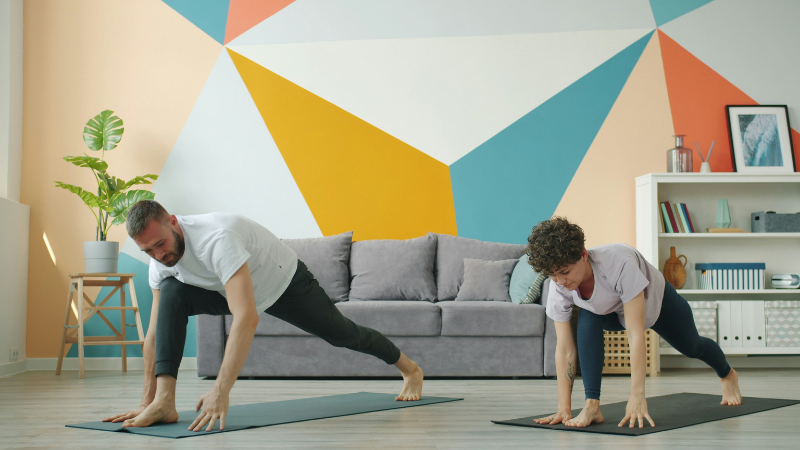
Starting simple is the smartest thing you can do. Many people become over-motivated on day one and then completely quit after four days because their bodies start hurting badly.
Your goal should not be perfection. Your goal should be consistency.
5-Minute Warm-Up to Wake Up Your Body
Start with 3–5 minutes of gentle movement before your main workout. You can march in place, move your arms in circles, rotate your shoulders gently, and perform slow bodyweight movements.
The purpose of a warm-up is to gradually prepare your body for exercise rather than immediately starting with intense movements.
Best Morning Exercises at Home for Beginners
You do not need complicated exercises to start a morning exercise routine for beginners at home. Simple bodyweight movements can help you build strength, balance, and stamina without needing gym equipment. Start with fewer repetitions and gradually increase them as your body becomes comfortable.
Bodyweight Squats
Squats are a simple beginner exercise for strengthening your legs and improving lower-body balance.
Beginner: 2 sets × 8–12 reps
Keep your feet about shoulder-width apart, lower your hips slowly, and push through your feet to return to the starting position.
Knee Push-Ups
Knee push-ups are easier than regular push-ups and are a good starting point for building upper-body strength.
Beginner: 2 sets × 5–10 reps
Keep your body straight from your knees to your head and lower yourself slowly before pushing back up.
Lunges
Lunges help improve lower-body strength, balance, and coordination.
Beginner: 2 sets × 6–10 reps per leg
Take a comfortable step forward, lower your body while keeping control, and return to the starting position.
Glute Bridges
Glute bridges target your glutes and can also help strengthen your hips and lower body.
Beginner: 2 sets × 10–15 reps
Lie on your back with your knees bent, keep your feet flat on the floor, and gently lift your hips before lowering them back down.
Plank
Planks are useful for building core strength. You don’t need to hold them for a long time when you’re starting.
Beginner: 2 sets × 15–30 seconds
Keep your body in a straight line and tighten your core while breathing normally.
Mountain Climbers
Mountain climbers add a little cardio to your routine and can help increase your heart rate.
Beginner: 2 sets × 15–20 seconds
Start slowly and focus on maintaining proper form rather than trying to move as fast as possible.
Start According to Your Fitness Level
You don’t have to complete every exercise on your first day. If you’re completely new to exercise, start with 3–4 exercises and gradually add more as your stamina improves.
The goal of a beginner workout isn’t to exhaust yourself. It’s to build a routine that you can actually continue.
Easy Stretching Exercises After Your Morning Workout
After your workout, spend a few minutes cooling down with gentle stretches. You can try a standing hamstring stretch, calf stretch, shoulder stretch, chest stretch, and gentle hip stretches.
Don’t force a stretch or bounce aggressively. The goal is to finish your workout gradually and leave your body feeling comfortable.
If you experience sharp pain, significant swelling, dizziness, or an injury, stop exercising and seek appropriate medical advice rather than trying to push through it.
15-Minute Morning Exercise Routine for Beginners at Home
0–3 minutes: Warm-up
3–5 minutes: Squats
5–7 minutes: Knee/wall push-ups
7–9 minutes: Glute bridges
9–11 minutes: Lunges or marching
11–13 minutes: Plank and bird-dog
13–15 minutes: Gentle stretching
If you’re completely new to exercise, start slowly. You don’t have to complete every movement at maximum intensity. The goal of this 15-minute routine is to create a sustainable habit.
30-Minute Morning Workout Plan for Beginners at Home
- 5 minutes: Warm-up
- 10 minutes: Squats, lunges, glute bridges, and push-up variations
- 5 minutes: Core exercises
- 5 minutes: Light cardio/marching
- 5 minutes: Cool-down and stretching
You don’t need to start with 30 minutes. If 15 minutes feels comfortable, gradually increase your workout duration instead of suddenly doubling the intensity.
7-Day Morning Exercise Schedule for Beginners
| Day | Workout |
|---|---|
| Monday | Full-body beginner workout |
| Tuesday | Light cardio + stretching |
| Wednesday | Full-body workout |
| Thursday | Light movement + mobility |
| Friday | Full-body workout |
| Saturday | Easy walk + stretching |
| Sunday | Rest/recovery |
Beginners don’t need intense exercise every day. Recovery is also part of a good routine. If you’re very new to exercise, start with fewer workout days and gradually increase your activity.
Common Beginner Mistakes That Slow Down Progress
One of the biggest mistakes beginners make is trying to do too much too quickly. Starting with an intense workout can leave you extremely sore and make it harder to continue.
Other common mistakes include skipping the warm-up, using poor form, comparing yourself with experienced people, ignoring recovery, and expecting visible results within a few days.
Your first goal should be consistency, not intensity.
How to Stay Consistent With Your Morning Exercise Routine
Make your routine easy enough that you can actually repeat it. Keep your workout clothes ready at night, decide your exercises beforehand, and start with a realistic duration.
I personally found that planning my next morning before going to sleep made things easier. Instead of waking up and negotiating with myself about whether I should exercise, I already had a simple plan.
You can also connect exercise with another morning habit, such as drinking water or having breakfast afterwards. Over time, the routine becomes easier to follow.
What to Eat and Drink Before and After a Morning Workout
You don’t need a complicated diet to support a beginner morning workout. If you exercise soon after waking up and feel comfortable without food, a large meal may not be necessary.
If you feel hungry or low on energy, a small, easy-to-digest snack such as a banana can be an option.
After exercising, focus on a normal balanced breakfast containing protein, carbohydrates, fruits or vegetables, and enough fluids.
Simple foods such as eggs with toast, oats with fruit, poha with a protein source, or yogurt with fruit can work depending on your dietary preferences.
Hydration is also important. Drink water regularly throughout the day and pay attention to thirst, especially in hot weather.
My Experience With a Morning Exercise Routine

When I started exercising in the morning, my biggest goal wasn’t an extreme physical transformation. I mainly wanted to become more active and consistent.
In the beginning, waking up early and exercising felt difficult. Some days I had low energy and wanted to skip the workout. But after making exercise part of my morning routine, it became easier to start.
What helped me most was keeping the routine simple instead of trying to do an intense workout every morning. I gradually increased my workout time as my stamina improved.
The biggest lesson I learned was that consistency matters more than having a perfect workout every day.
What Changes Can You Expect From a Consistent Morning Exercise Routine?
Everyone responds to exercise differently, so there is no fixed timeline for results. However, with consistent physical activity, you may notice that everyday movement becomes easier and that you feel more comfortable following a regular routine.
You may also find it easier to build discipline around your mornings because exercise becomes a regular part of your day.
Don’t judge your progress only by appearance. Improvements in stamina, consistency, strength, mobility, and how you feel during everyday activities are also meaningful signs of progress.
You can also read beneficial and valuable articles: How to build self-confidence and self-esteem.
Frequently Asked Questions
How long should a beginner morning workout be?
Beginners can start with around 10–20 minutes and gradually increase the duration. You don't need a long workout to build consistency. The best starting duration is one that you can comfortably repeat.
Can I do a morning workout at home without equipment?
Yes. Many beginner exercises, including squats, lunges, push-up variations, planks, glute bridges, and marching, can be performed without equipment. A small open space is usually enough.
How many days a week should beginners exercise?
Beginners can start with around 3–5 workout days per week, depending on their fitness level and recovery. Light movement such as walking or stretching can be used on easier days.
What should I do before a morning workout?
Start with some water if needed and perform a few minutes of gentle warm-up movements. If you feel hungry or low on energy, a small snack such as a banana may be suitable for some people.
Is a 15-minute morning workout enough for beginners?
Yes, 15 minutes can be a practical starting point for beginners. The most important thing is performing the routine consistently and gradually progressing as your fitness improves.
Conclusion
A morning exercise routine for beginners at home doesn’t need to be complicated. You can start with just 15 minutes of simple exercises such as squats, push-up variations, glute bridges, planks, and stretching.
Don’t worry about having a perfect workout from day one. Start at your current fitness level, stay consistent, and gradually increase the duration or difficulty as your body adapts.
For me, the biggest change came when exercise stopped feeling like something I had to force myself to do and became a normal part of my morning. Start small, keep showing up, and let your routine improve over time.
Read more articles here: Hustel With Abhi
✨ Join 10k+ readers for free tips!
Subscribe & never miss a post 📩
1 thought on “Morning Exercise Routine for Beginners at Home: 15 Easy Exercises”